
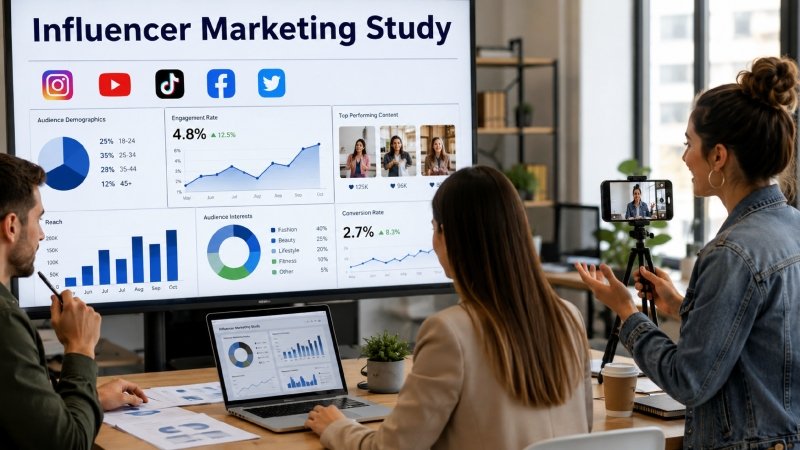
Influencer marketing has evolved from a niche advertising strategy into one of the most effective ways for brands to reach online audiences. Social media platforms have changed how people discover products, and influencers now play a major role in shaping buying decisions. An influencer marketing study helps businesses understand what works, what audiences expect, and how marketing campaigns can deliver better results.
As digital competition grows, companies are investing more in influencer partnerships than ever before. Understanding the findings of recent influencer marketing studies can help marketers create authentic campaigns that build trust and generate measurable returns.
What Is an Influencer Marketing Study?
An influencer marketing study is research that examines how influencer campaigns affect consumer behavior, brand awareness, engagement, and sales. These studies typically analyze data collected from social media platforms, surveys, interviews, and campaign performance metrics.
The goal is to identify patterns that explain why some influencer campaigns succeed while others fail. Businesses use these insights to improve their marketing strategies and maximize their return on investment.
Why Influencer Marketing Continues to Grow
Consumers spend several hours each day on platforms like Instagram, TikTok, YouTube, and Facebook. Rather than relying only on traditional advertisements, many people trust recommendations from creators they follow regularly.
Research consistently shows that audiences appreciate genuine opinions more than scripted advertisements. When influencers share honest experiences, followers are more likely to consider purchasing the recommended products.
Several factors contribute to this growth:
- Higher consumer trust
- Better audience targeting
- Increased engagement rates
- Stronger brand awareness
- Cost-effective marketing compared to many traditional channels
Key Findings from Influencer Marketing Studies
Recent influencer marketing research highlights several important trends.
Authentic Content Performs Better
Consumers quickly recognize overly promotional content. Studies show that influencers who maintain their natural voice often generate higher engagement and stronger audience trust.
Brands that allow creators creative freedom generally receive better campaign performance than those using highly scripted promotions.
Micro-Influencers Deliver Strong Engagement
One of the biggest discoveries in influencer marketing studies is the value of micro-influencers.
Creators with smaller but loyal communities often achieve higher engagement rates because they interact more closely with their followers. Their recommendations feel more personal and trustworthy.
Video Content Dominates
Short-form videos continue to outperform many other content formats.
Platforms such as TikTok, Instagram Reels, and YouTube Shorts encourage users to consume quick, engaging content, making video one of the most effective formats for influencer campaigns.
Long-Term Partnerships Build Trust
Instead of one-time sponsored posts, many successful brands now work with influencers over several months.
Repeated exposure helps audiences associate influencers naturally with the products they recommend, increasing credibility and improving conversion rates.
How Businesses Benefit from Influencer Research
Studying influencer marketing data helps businesses make smarter decisions.
Benefits include:
- Selecting the right influencers
- Understanding audience preferences
- Improving campaign planning
- Measuring return on investment
- Reducing marketing risks
- Creating more engaging content
Instead of relying on assumptions, companies can use research-backed insights to improve every stage of their campaigns.
Metrics Used in Influencer Marketing Studies
Researchers evaluate campaigns using several important performance indicators.
Engagement Rate
This measures likes, comments, shares, and saves relative to the audience size.
Reach
Reach shows how many unique users viewed influencer content.
Conversion Rate
This tracks how many viewers completed a desired action, such as making a purchase or signing up for a newsletter.
Click-Through Rate
CTR measures how often users click links included in influencer posts or stories.
Return on Investment
ROI compares campaign revenue with the amount spent on influencer partnerships.
These metrics help marketers understand which campaigns generate real business results.
Challenges Identified by Influencer Marketing Studies
Although influencer marketing offers many advantages, research also highlights several challenges.
Fake Followers
Some influencers artificially increase follower numbers using bots, making audience size misleading.
Low Authenticity
Overly promotional content may reduce audience trust and lower engagement.
Poor Influencer Selection
Choosing creators whose audience doesn’t match the brand can lead to disappointing campaign results.
Difficult ROI Measurement
Some businesses still struggle to accurately measure the financial impact of influencer campaigns.
Future Trends
Influencer marketing studies suggest several trends will shape the future:
- Greater use of AI-powered campaign analysis
- Increased partnerships with nano-influencers
- More emphasis on authentic storytelling
- Growth of live shopping experiences
- Better performance tracking tools
- Stronger focus on community building
Brands that adapt to these trends are likely to stay competitive in the evolving digital marketplace.
Best Practices for Successful Influencer Campaigns
To maximize results, businesses should:
- Partner with influencers who match their brand values.
- Focus on engagement rather than follower count.
- Encourage authentic product reviews.
- Monitor campaign performance using reliable analytics.
- Build long-term relationships with creators.
- Continuously learn from influencer marketing research.
Conclusion
An influencer marketing study provides valuable insights into how modern consumers interact with digital creators and branded content. Research consistently shows that authenticity, audience relevance, and long-term partnerships are key drivers of successful campaigns.
As influencer marketing continues to evolve, businesses that rely on data rather than assumptions will be better positioned to create meaningful connections with consumers. By applying the lessons learned from influencer marketing studies, brands can improve engagement, strengthen customer trust, and achieve sustainable growth in an increasingly competitive digital landscape.